What the Art Market Can Teach Us About Branding

By Al Ries and first published on AdAge.

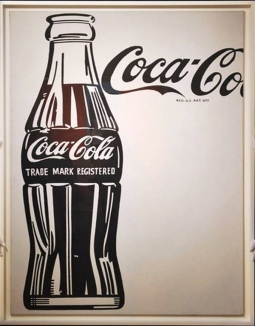
ImageAt Christie’s recent post-war and contemporary-art sale, a black-and-white painting of a Coca-Cola bottle sold for $57.2 million.

What made a black-and-white painting of a Coca-Cola bottle worth that kind of money? It was the brand, Andy Warhol. Not the painting.

Now suppose you were a company in the business of creating art and your major competitor was Andy Warhol. You might do what most companies do when they have to compete with a market leader.

Create a better product at a cheaper price.

You might decide to create a full-color painting of a Coca-Cola bottle and sell it for less than $57.2 million. And to include a complete Coca-Cola trademark instead of just a partial one.

A foolish idea, of course, but isn’t that what many companies do? Compete with a market leader with a better product at a cheaper price.

The value of a brand
The art market teaches us how valuable a brand can be. And in the world of marketing, the value of brands continues to increase. Why is that so? Because as more and more products and services hit the market, consumers have less and less time to evaluate the merits of individual products. So they just go with the market leader, under the assumption the leading brand is the better product.

One example. In 1977, the average supermarket carried 10,425 items. Today, the average supermarket carries more than 40,000 items.

So today, consumers think brands instead of products. Heinz instead of ketchup. Hellmann’s instead of mayonnaise. Tropicana instead of orange juice. Campbell’s instead of canned soup.

That’s exactly what is happening in the art market. Buyers buy brands, not art. The name on the lower right-hand corner of the picture is what’s important. Not the picture itself.

The value of fake art 
A percentage of artwork held by collectors or exhibited in museums is fake. How much is a fake Picasso worth?

The same amount as a genuine Picasso as long as nobody knows it’s a fake. The value of a painting lies primarily in the name of the painter (the brand), not in the painting.

On the other hand, a real Picasso is worth very little if everyone thinks it’s a fake.

How much is a fake dollar bill worth? The same amount as a real dollar bill as long as no one knows it’s a fake.

So, how do you become the next Picasso? The same way you build a powerful brand. Create a new category you can be first in.

Consider some Internet brands that have become extremely valuable. Snapchat in disappearing photos. Square in smartphone credit-card readers. Pinterest in online scrapbooks. Kickstarter in equity fund raising.

The best way to become a world-famous artist is to create paintings that are recognized as a new category of art. Not just by creating a better painting.

Some examples:

  • Impressionism: Claude Monet
  • Pointillism: Georges-Pierre Seurat
  • Expressionism: Vincent Van Gogh
  • Cloisonnism: Paul Gaugin
  • Naїve painting: Henri Rousseau
  • Fauvism: Henri Matisse
  • Cubism: Pablo Picasso
  • Neo-Plasticism: Piet Mondrian
  • Suprematism: Kazimir Malevich
  • Surrealism: Salvador Dali
  • Abstract Expressionism: Willem de Kooning
  • Drip painting: Jackson Pollock
  • Minimalism: Mark Rothko
  • Flag art: Jasper Johns
  • Pop art: Andy Warhol
  • Comic art: Roy Lichtenstein
  • Optical art: Victor Vaserely
  • Kinetic art: Alexander Calder
  • Sensationalism: Damien Hirst

Not every famous artist created a new category. Not every famous brand did either. But it’s a lot more difficult for a No. 2 or No. 3 artist to get famous than it is for the pioneer in the new category.

Everybody knows Jackson Pollock, but who is the No. 2 drip painter?

In the same way that it’s a lot more difficult for a No. 2 or No. 3 brand to get famous than it is for the pioneer in the category. Pepsi-Cola’s problems are more difficult than Coca-Cola’s.

Focus on the category, not the brand
When launching a new brand, companies tend to focus on the brand and its benefits, rather than the new category.

Chobani could have focused exclusively on the fact that its yogurt is creamier and tastier than its competitors. (The mistake that Fage made.)

Instead, Chobani promoted itself as the Greek yogurt.

When I was running an advertising agency, Richard was our best art director. He made beautiful sketches used in creating layouts for client approval.

After the client approved a layout, we normally hired a photographer to take pictures for the finished ad.

One day Richard said to me, “Why are you spending money for photography when you could use my beautiful drawings?”

I didn’t have much of an answer, but shortly thereafter Richard quit to paint full time. In a few years, he became a leader in the school of art called “photorealism.”

In other words, paintings that are “better” than the photographs they were based on.

His full name? Richard Estes. Look him up. Many of his paintings have been sold on auction at Christie’s, one for $542,500.

I should have taken his advice.

5 Biggest Social Media Lessons of 2013

Tweet
BY KATY FINNERAN for Bloomberg and MASHABLE
 

It was a big year for social media. Twitter made its successful debut on the stock market while Facebook recovered from its troubled IPO a year earlier. We also saw the launch of Vine, the rise of Snapchat and the acceptance of social media by the SEC, which said public companies could use these sites to disclose information.

And that was just in the United States.

In China, which has the world’s biggest population of Internet users, ecommerce giant Alibaba spent $586 million for a stake in Weibo, the country’s top microblogging service and a rival to Tencent’s popular WeChat instant messaging app. Meanwhile, in the Ukraine, mobile phone operators were expecting a boom in data traffic as protests against the country’s president were organized over social networking sites, similar to the Arab Spring of 2011.

All of which is to say that if 2013 showed us one thing, it’s that there’s a growing global business in accumulating friends and followers.

Of course, similar to previous years, there were also social media gaffes and hacks mixed in, along with plenty of celebrity narcissism and, unfortunately, twerks. We still have a ways to go in understanding and applying social media to the business world, but there was no shortage of lessons to glean from 2013.

Social Media Can Move Markets

On April 23, the Associated Press’ Twitter account was hacked, sending a fake tweet that there were “two explosions in the White House and Barack Obama is injured.” In a matter of seconds, the Dow dropped 150 points.

Then in June, activist investor Carl Icahn joined Twitter, first using it primarily as a megaphone in his battle with Dell and later to announce his stake in companies, most notably Apple. On Aug. 13, Icahn tweeted that he had a “large position” in the iPhone maker, pushing the shares of the tech titan up about 5%.

Witnessing a single tweet swing the pendulum of markets proved that social media is every bit as valuable to day traders as it is to newsmakers.

Social Media Is Increasingly Visual

Sure, you can say a lot in 140 characters, but a picture is still worth a thousand words. In January, Twitter-owned Vine launched as a mobile service for sharing six-second looping videos. Then, in June, Facebook responded by enabling video on Instagram.

We also saw the rise of Snapchat, a service that allows users to share photos and videos without the permanency of other social networks. That’s because users control how long (one to 10 seconds) the recipients can see their “Snaps.” Once the time is up, the photo or video disappears. The service has become so popular among young Internet users that Facebook reportedly recently offered to buy it for $3 billion. Snapchat declined.

And days before its IPO, Twitter launched a product update so that tweets with Twitter photos or Vine videos display a preview thumbnail. While this facelift is still in its early days, it’s already made Twitter feel like a more visual and less-textual platform.

Social Media Isn’t Just for the Kids

From Warren Buffett joining Twitter to Jamie Dimon joining the LinkedIn Influencer program, 2013 showed us that global leaders are embracing social media.

Sometimes, the business impact can be unpredictable, as Rupert Murdoch’s tweets have shown.

Social Media Advertising Is Growing, Evolving

During the Super Bowl, the most talked about advertisement wasn’t a coveted 30-second TV commercial, but rather a tweet. After a power outage at the Superdome prompted a 34 minute break in play, Oreo responded by tweeting “No power? No problem” and an image of an Oreo with the text “you can still dunk in the dark.” The tweet generated strong press and proved a turning point in the opportunities for advertising on social media.

2013 also showed how much money could be made from social media advertising. In the third quarter, Facebook reported revenue grew 60% compared with a year earlier, with a large piece of that from mobile advertising. Around the same time, Facebook-owned Instagram announced sponsored posts would be coming to user newsfeeds in the United States.

Social Media Could Be TV’s Best Ally

In October, Nielsen Ratings released an analysis showing a correlation between live-tweeting during TV and having a larger, more engaged audience.

The data illustrated that 19 million people in the U.S. composed 263 million tweets about live TV in the second quarter of 2013.

Social TV is still in the early days but with television as the home to coveted big dollar ads and social media as the venue for audience amplification and engagement, this could be the beginning of a long and beautiful relationship.

Luxury Brands Follow Shoppers to Digital

This article first appeared on eMarketer.com.

Affluents spending more time, money than ever online

For many luxury consumers, the appeal of buying luxury goods goes beyond owning the actual item—it’s the experience surrounding the purchase of an expensive item. And what separates the luxury buying experience from the mass experience is the personal approach.

The exclusivity a brand offers a customer—whether it’s limited-edition merchandise, a first look at a product or personalized service—is a key element of the luxury experience, according to a new eMarketer report, “The Luxury Consumer: Shoppers Lead Brands to Digital Channels.” Translating that experience to the digital realm is one reason luxury marketers initially balked at the idea of creating virtual spaces for their goods. How could a brand duplicate the connection between a trusted sales associate and loyal clientele? How could a brand possibly communicate the attributes of a premium product without letting the client touch it, smell it or try it on?

So what’s changed? Why are luxury brands reconsidering their aversion to digital marketing? There are a few developments that are pushing them to increase online marketing efforts.

One major factor is an increase in the amount of time affluent consumers spend online. Ipsos MediaCT found that among US affluents with household income of more than $100,000 per year, the amount of time spent online grew nearly one-quarter from 2011 to 2013, at 32.8 hours per week to 41.6 hours per week, respectively.

“These aren’t the idle rich,” said Skip Brand, CEO of Martini Media, a digital agency specializing in luxury marketing. “These are people who use online resources to save time. And they will spend money to save time.”

Along with an increase in affluents’ time spent online is an increase in their spending online. Martini Media reported that among affluent shoppers, the average spending on luxury sites was up 20% year over year in Q2 2013.

In a Q1 2013 survey by American Express Publishing and Harrison Group, 48% of US affluents with income of more than $100,000 said they discovered new luxury products while shopping online, a rate almost equal to the 50% who said they discovered new products while shopping in-store. Even though consumers are still making more purchases in a physical store, they are discovering products, and therefore being exposed to more marketing messages, online.

That’s not to say buyers of luxury items no longer favor making in-store purchases (the same is true of buyers of mass items, it should be noted). In an April 2013 Luxury Institute study on the multichannel purchasing habits of US internet users with incomes of at least $150,000, 48% of respondents sourced information about luxury fashion online via a computer. Yet only about a quarter actually completed the purchase online. Meanwhile, 72% of affluents said they went to brick-and-mortar stores to get information on luxury fashion items, and 62% said they went to a store to complete a purchase.

Read more at http://www.emarketer.com/Article/Luxury-Brands-Follow-Shoppers-Digital/1010424#uPoZiySI6WEzwQU2.99

How to Convert One-Time Customers Into Repeat or Lifetime Customers

By: . This article first appeared on SearchEngineWatch.com.

Holiday Hangover

All great parties must come to an end. The same goes for your crazy-bananas high tide of seasonal sales extravaganza.

After the holiday rush is over, a hangover may set in, causing disorientation, grogginess, and denial that it all had to come to an end. But unfortunately, for many businesses, the numbers don’t lie:

Client Conversions after Holidays

This time of year most marketers are focused on accentuating their business’ peak traffic/conversion season. Your business may thrive in Q4 or perhaps in Q1.

Getting the most out of your seasonal high tide can be an exciting ride, but don’t neglect what lies ahead: the slow season. Smart marketers can have even more impact on their business by mitigating the low tide that follows those record-breaking sales cycles.

Go ahead and accept this is going to happen. You don’t have to wake up with a hangover if you plan ahead.

Your Objective: Create Repeat Customers

The objectives of your hangover cure will be specific to your business.

To mitigate the valley that usually follows your seasonal peak, you’re probably looking to generate more sales and revenue. You can’t just magically make this happen. If you could, then the entire year would be a non-stop party.

The objective here should be to take possible one-time customers and transform them into repeat customers – or even lifetime customers!

Reasons Someone May Buy Again

Folks who purchase during the holidays are probably different than folks who purchase throughout the year. Some folks may be repeat customers, which is awesome. Many of the people who make holiday purchases have never been to your site, and they may make only that single gift-minded transaction.

There are a few personas to consider when transforming these one-time purchasers to a repeat or lifetime customer:

  • May buy again for themselves: Often people buy gifts for other folks that they might find interesting for themselves. Or they may purchase a different product you offer. Hopefully, when someone buys from you they are impressed with the product and this will inspire them to make a purchase for themselves. This is what you want to happen.
  • May buy again as another gift: Most of the time we don’t buy gifts once for one person throughout the entire year. If you liked a specific product for one friend, it’s very possible another friend may like that same product or a different product from the same company.
  • May recommend to others: Hopefully your holiday customer is so impressed with their experience with your company that they will tell others, which will influence their purchasing decisions.

The relationship with your holiday crowd doesn’t have to end once the lights come off the Christmas tree.

Methods to Continue the Conversation

You need a game plan to help with that holiday hangover and to sustain momentum from your holiday upswing. You should know who needs to be targeted with additional content, information, and special offers but now the question is how.

There are a few channels at your disposal to foster lifetime customers:

  • Email marketing: Develop an email marketing program targeted to individuals who purchase specifically during the holidays. It is likely that these folks may not have even used your product yet because they gave it away as a gift. Perhaps provide some incentive to make their purchase.
  • Remarketing: Continue the conversation with remarketing. You don’t want to blast people with ads and follow them around the Internet for six months, but you should maintain an acceptable level of visibility in order to inspire people to purchase again. Using dynamic remarketing ads can be a huge win in this category as you dynamically display specific images to each user.
  • Social: When someone makes a purchase, encourage that customer to engage with you on the various social platforms, the most prominent being Facebook.
  • Direct marketing: This is the old guard in this list but you should certainly consider direct marketing as a tool for creating lifetime customers.

All of these channels will help continue the conversation past the holidays and hopefully into future purchases. Within each of these channels you should utilize various messaging and value propositions.

Mixing up your campaigns and offers will minimize banner blindness and keep your content fresh:

  • Special offers: People love special offers. Consumers respond most readily to specials within social over any other type of content, according to a recent study.
  • Contests and giveaways: The aforementioned report also states that second highest response rate on social media belongs to contests and giveaways.
  • New products: When you launch a new product, make sure that all this lights up your social media channels. All of your customers should know when new products are ready, but especially those holiday purchasers you’re still trying to convert to lifetime customers.
  • Cross sell: Especially within email you should promote other products that the individual didn’t buy within their initial purchase.

Summary

Make a plan now to capitalize on the conversation that has been started by your peak seasonal traffic. This goes for ecommerce as well B2B lead gen folks too.

Don’t let that holiday hangover give you a headache. Devise a plan that will work throughout the rest of the year, especially those low-tide months were you could use a little boost.

Matt Cutts on Blog Comments, Links & Spam

By  and originally posted on SearchEngineWatch.com

Use Your Name, Not Keywords

Matt Cutts

If you’ve ever wondered whether those links from comments on blogs would hurt or help your SEO strategy, Matt Cutts is tackling this scenario in his latest webmaster help video from Google.

Google’s Webmaster Guidelines discourage forum signature links but what about links from comments? Is link building by commenting against Google Webmaster Guidelines? What if it’s a topically relevant site and the comment is meaningful?

Cutts said this is the kind of thing he does all the time. He often posts comments on blogs, that are topically relevant, and he links to his own personal blog rather than the Google webmaster help blog or website.

I leave topically relevant comments on topically relevant sites all the time. So somebody posts an SEO conspiracy theory and I’m like, “No, that’s not right,” I’ll show up and a leave a comment that says, “Here is the pointer that shows this is not correct,” or, “Here’s the official word,” or something like that. And I’ll just leave a comment with my name, and often even point to my blog rather than Google’s webmaster blog, because I’m just representing myself. So lots of people do that all the time and it is completely fine.

He does caution that how you represent yourself in a link can make the difference. He suggested users use the person only rather than the company name or keyword-rich “name” to avoid any problems.

The sorts of things that I would start to worry about is it’s better to often leave your name so someone knows who they are dealing with, rather than “cheap study tutorials” or “fake driver’s license”, or whatever the name of your business is, often that will get a chillier reception than if you show up with your name.

He also warns that blog comments should not be the main part of your link building strategy. Having a large portion of those backlinks coming from blog comments, it can raise red flags with Google.

If your primary link building strategy is to leave comments all over the web, to the degree that you have a huge fraction of your link portfolio comments, and no real people linking to you, then at some point that can be considered a link scheme. At a very high level we reserve the right to take action on any sort of deceptive or manipulative link schemes that we consider to be distorting or rankings.

But he does reiterate that as you go about your day shouldn’t be a concern.

But if you just doing regular organic comments and not doing it as a “OK, I have to leave this many comments a day every single day because that’s what I’m doing to build links to my sites,” you should be completely fine and it’s not the sort of thing you should be worried about it all.

As long as you aren’t actively using blog comments as a way to increase your backlink profile significantly, you are posting on topically relevant blogs, and you aren’t using the a spammy keyword heavy name, but are using your real name instead, you should be fine and not get penalized.

Moving from Mobile Apps to Web Apps

By Kelly Meeneghan, Manager at 1&1 Internet, Inc. (www.1and1.com)

This article was first posted on websitemagazine.com.

It did not take long for consumers to develop a reliance on mobile apps to help manage daily responsibilities and engagements. The convenience and productive nature of these tools are the reasons why apps have been so widely adopted in both consumer and business environments. Understanding this demand, Web hosting providers have applied the concept to their online solutions. Now businesses can implement the same convenience, synchronization and simple implementation of mobile apps directly into their professional websites.

As consumer expectations are consistently evolving, businesses are expected to cater to the changes, especially online. Once considered a simple “online business card,” businesses are now required to involve more interaction and ease via their websites offering a more interactive experience for visitors. Many owners prefer to maintain full control over the creation and management of their site and do-it-yourself (DIY) website design packages have become the ideal solution. Bringing the two together, some Web hosts have adapted their DIY solutions to offer a variety of Web applications. Though the principle is similar to mobile apps, Web apps allow integration of big brands directly into one central location – the website. Fitting the industry and individual needs, business owners can now position themselves as a larger player in the market by creating a more impressive reputation. 

Assuming you have existing accounts with the companies, incorporating Web applications into your site can be easily accomplished for both traditional business as well as vertical business initiatives. For example, many businesses use the photo-sharing platform, Flickr to illustrate past events, completed work and products – a great method to visually showcase expertise and skills. If this is the case, an attractive presentation of these images can be created with the Flickr Photostream Web app directly within your homepage. Additionally, those that require much paperwork like a doctor or law office, can leverage the Scribd Documents Web app. This allows the owner to upload important material and make it readily accessible for those that may require it saving time for both the owner and client.

Consumers evaluate businesses not just on performance before committing, but also availability and transparency. While establishing a professional website is a good start, Americans are now expecting businesses to take it a step further. To improve communication with clients, offer Skype capabilities. The enhanced convenience will show your desire to help using another avenue for communication. Additionally, if you actively leverage social media networks, like Facebook or Google+, for business purposes integrate feeds and “Like” buttons. Increasing the opportunity for customers to contact and interact will also encourage trust.

Furthermore, there is an expansive list of options for businesses that require more specialized or niche features, like restaurants and online retailers. Restaurants often leverage third party websites like OpenTable and Yelp Reviews to help encourage great efficiency and reputations on the Internet. Integrating these elements directly within the website will deliver transparency and all the needs of a consumer to one website – a level of convenience craved by many who enjoy dining out. Taking it a step further, business owners who sell online often leverage multiple big online retailers like Amazon and eBay to help increase visibility and drive profits. Unfortunately, these eCommerce platforms often direct visitors away from the businesses’ professional website and onto their own. In a world where visitor retention is a key ingredient to boosting traffic and search engine optimization, Web apps can help businesses achieve these goals.

By centralizing all external, online accounts into one location, Web apps have become a valuable asset for both businesses and their clients. Similar to mobile apps, businesses apply these Web apps to help generate profits and build accessibility. This new level of convenience is what the public has been craving from small businesses but has not yet had the opportunity to experience. Now businesses have the ability to position themselves on the same level as larger competitors while maintaining and presenting its small business charm.

How To Overcome Social Media Fatigue

By , and originally posted on http://socialmediaimpact.com.

Social media fatigue is a sneaky thing. It crops up when you least expect it, and it can cause mass confusion for any new social media manager working in the online space. That is why when it does happen – you need to know how to refocus and get it under control. Today we’re talking about overcoming social media fatigue.

For more of the best tips, tricks and practices in the social media niche, check out our full courses on social media here! They are pretty awesome.

What In The World is Social Media Fatigue?

It’s 2am in the morning. No matter how hard you stare at the screen, your results have not changed. As a social media manager it is your job to work with social media 24/7. Twitter is open, so is Facebook, Pinterest, Google+ and YouTube.

You’ve been checking your metrics. So many things have changed! Why aren’t you getting results? What can be improved? Just when you fix one issue, another 3 crop up. This is the life of a full-time social media manager.

Social media fatigue is a real thing. When you feel like you’ve spent hours working on something, with little or no effect – that is SMF. When you can’t look at another tweet metric anymore – that is SMF. It’s real, and one day it will sneak up on you.

What do you do when social media fatigue comes knocking on your door?

5 Ways To Overcome Social Media Fatigue Right Now

#1: Back to today’s scheduled programming. If you find yourself overwhelmed by the updates, changes and presence on your social pages then you are not organizing your strategy tightly enough. If something new happens, schedule it in for tomorrow, to investigate for an hour or two. But never allow whole days to be swallowed up with investigations.

#2: Be accountable to the people in your network. As a social media manager you will make friends with key influencers who keep things fresh and point you in the right direction. This already eliminates a lot of the leg work that you have to do. People working together for common social media success goals rarely get social media fatigue.

Social media fatigue

#3: Don’t stop engaging, it’s people that make social media so interesting. I know getting lost in the tech side of social can be laborsome, bland and even irritating – but thankfully you have your fans and followers to connect with. If you are feeling ‘burnt out’ refocus your main strategies on your fans, and remember that it’s people that matter most.

#4: Never force new content. If you are not a natural content creator, you can die of old age looking for things to inspire you online. Have a plan – an ‘inspiration’ plan. Have a list of steps in place or places to go to when you are not feeling passionate about your topics. Start at the middle, start at the end. Mix it up! But never allow yourself to get complacent and lazy.

#5: Get out there and have a life. Most people don’t realize that social media is fuelled by real life events. As your businesses own social media manager you need to be out there making things happen in the real world. That way you will never run out of things to say, or content and insights to share. Sitting at the office all day is going to bring on SMF.

If you are struggling to get the same results you received last week, have a look at what you have been posting about. Is it engaging, interesting – or simply template nonsense that you are rehashing? This my friend, is social media fatigue. Do not let it infect your progress!

About John Souza

John Souza is founder and chief strategist of SMMU and Social Media Impact, and is a bestselling business author. He won the 2011 Tech Marketing Awards ‘Social Media Marketer of the Year’ and most recently the About.com Reader’s Choice Award for Best Online Education Site. John has appeared on The Michael Gerber Show, and his business has been honored at the Mashable Awards, Forbes Business Awards and The Stevie Awards.

Social Media’s Dirty Little Secret

By:  and originally posted on AdAge.com.

It’s time to rethink social media in marketing.

Why, you might ask? After all, you’re gaining traction. Your Facebook page has millions of likes and your team says engagement is at an all-time high. Your analytics dashboard says “viral conversations” on Twitter are generating heaps of positive sentiment about your brand. Oh, and you just had a sweet idea for spicing up your Pinterest page. What’s not to like?

That’s all good stuff, but it’s an incomplete picture of what social can achieve. Our industry continues to focus on social metrics that don’t necessarily translate into real business value. It requires that we recast social as a source for data driven relationship-building and insights for the entire business.

Not just marketing.

The dirty little secret is that social experts know that just getting likes, shares and engagement isn’t important for most businesses. I’ve had quite a few social-media experts emphatically tell me that they don’t want to be pigeon-holed as “just social.”

How can it be that social is the most powerful transformative force in modern business, yet social experts are desperate to demonstrate that they’re bigger than what their job descriptions imply?

The problem is that the marketing interpretation of social media doesn’t match the big opportunities it presents.

There’s a systemic problem with the way businesses perceive social, both on the agency and client side. People are creating departmental moats around social — claiming it for marketing, or communications, or customer service. Meanwhile, all of those pieces together (plus a lot more) equal the total experience of your brand.

For marketing, the interesting work happens when we use data from social to correlate new behavior to customers — and then create personalized experiences across every channel based on that data. That either requires people grinding away in a neo-Dickensian sweatshop, or some serious business intelligence and analytics.

Some of that disconnect is indeed caused by a lack of the right skills in our industry. That needs to be addressed with a long view into the future of the marketing profession. We’ve been trying to crack this at IBM by working with more than 1,000 universities to create more data-driven marketing professionals — our size means we need big solutions.

Social is not a professional specialty; it’s the way businesses should be run. Saying that you “own social media” is limiting. It needs to be part of your business strategy, integrated with CRM, and span both brand and employee experience to produce measurable ROI.

There’s a new book, “The Social Employee: How Great Companies Make Social Media Work,” which examines why organizations such as AT&T and Southwest Airlines are successful social businesses. These organizations activate their brands by encouraging employees to be socially fluent and engage within and outside their companies. In turn, these firms can reap the rewards: heaps of valuable data thrown off from social interactions and deeper loyalty from customers who feel understood, valued and included.

So if you think of social as a function of marketing, then you’re limiting your potential. You’re also ignoring the future that experts know is coming. There are things you and your colleagues can do to break through, but it’s not simple:
– Be an internal evangelist and forget the awards: Make sure social business is at the center of your business, from sales and marketing to product development, R&D, to supply chain.
– Be the center of intelligence: Strengthen the ties between social and enterprise transformation, whether it’s analyzing what your competitors are doing, or listening to how your most important clients or vendors are perceived.
– Be bigger than a channel: Don’t pigeonhole yourself or your team as “social media specialists” within marketing. Be a change agent for this new behavior and help apply it to every part of your business.

So maybe as we move forward, we’ll have a better way to describe this shift in highly personalized interactions with our customers. The key is evolving from being a social channel expert to a change agent. Just as automation revolutionized manufacturing, and Six Sigma provides rigor for C-suite decision-making, social media is the future of business transformation. So the lesson from this dirty little secret is that marketers who use their skills to lead social innovation will be the real social superstars.

About the Author

Howard Pyle is Vice President of Digital Strategy and head of the IBM Design Lab in NYC, where he’s responsible for the strategy and programs driving digital experience design & development, social business and content services across IBM’s global marketing & communications function. He oversees a team of designers, developers, content strategist and digital marketers to develop user interfaces development for IBM products, such as the commercial version of Watson and content services for mobile. He was previously Senior Partner and Global Director for Digital Platforms on the IBM account at Ogilvy. Prior to Ogilvy, he was Executive Director of Creative Development in TBWA’s Digital Arts Group. He co-founded the boutique agency Local Theory and developed creative products and digital strategy for Nokia, National Geographic, Fremantle Media and others.


How to Use Tumblr for SEO and Social Media Marketing

by  and first posted on Moz.com.

An introduction to Tumblr

Tumblr Logo

There are so many social media platforms out there today that online marketers have to be concerned about when promoting content online, that it can be easy to overlook some of the important ones.

Tumblr is one of those social networks which is often overlooked, but which has tremendous potential for SEO and social media marketing. I myself was slow to adopt Tumblr as a social media platform, but once I started using it I became hooked by its power and simplicity. Hopefully by the end of this post, you’ll feel the same.

In this post today I will be covering 1) What Tumblr is and how it works, 2) The benefits of Tumblr compared to other social networks, and 3) Actionable advice on how you can use Tumblr for online marketing, including specific content ideas.

Sounds good? Let’s get started.

Why should I care about Tumblr?

Before we get too far, let me provide some stats about Tumblr which should help put things into perspective:

  • 130.5 million blogs on Tumblr, as of August 2013
  • 28th highest traffic site on the web according to Comscore
  • 300 million unique monthly visitors according to Yahoo
  • 50% of Tumblr users are under the age of 25
  • 53.5% of Tumblr visitors are female

As you can see, the numbers are massive. There are now over 130 million Tumblr blogs (known as “tumblrogs”), which makes Tumblr the largest hosted blog platform on the web, compared to the 70 million blogs hosted on WordPress.com. It has 300 million monthly visitors, basically 15% of all Internet users. And it has a demographic that is unique in that 50% of the users are under 25, many of whom are teenagers (whereas teens are reportedlyditching Facebook in droves).

Big brands have taken notice of this too. In May, Yahoo purchased Tumblr for $1.1 billion (the largest purchase of a consumer Internet company since Google bought YouTube), and many of the world’s largest brands already have a presence on Tumblr.

Big Brands on Tumblr

Clearly, if you’re not on Tumblr by now, you’re falling behind the curve.

What is Tumblr?

So what the heck is this Tumblr thing anyway? It can be hard to describe Tumblr because it combines the functionality of many different kinds of sites.

Tumblr = Facebook + WordPress

The way I like to think of Tumblr is as a cross between WordPress and Facebook– Tumblr has all the blogging functionality of a blog platform such as WordPress, but also includes all the features of a social site such as hashtags, following, sharing, and liking. Tumblr is similar to Pinterest in many ways, except instead of multiple boards you have a single blog.

So although Tumblr is one of the most popular blogging (or microblogging) platforms on the web, it goes beyond just being a blog and allows users to share and like each other’s content, follow other Tumblr blogs, and discover new content through hashtags. It’s a blog platform with built-in social functionality and incredible viral potential.

The benefits of Tumblr

Ok, so now we have a better idea of what Tumblr is and why it’s important, but what are the benefits of Tumblr compared to other social networks and blogging platforms? There are 5 key benefits:

1) Dofollow links

First the biggie. Links from Tumblr, unlike most other social networks are dofollow. Tumblr is at its core a blogging platform, and you have full control of how your tumblrog appears, including using dofollow links on your site.

Where things get interesting is when you consider the social aspect of Tumblr. Tumblr has social sharing functionality (called “reblogging” in Tumblr parlance) built right in, and if you have a popular post it will be reposted to many other tumblrogs.

The thing is that each of these reblogs is a dofollow backlink to your original post! That means if you have a post that is reblogged 100 times, your tumblr blog just got 100 dofollow backlinks! For even more fun, you can include a link within the post itself. By doing so, both your original post on Tumblr, and the site linked to within the post will receive the backlinks.

Tumblr Backlinks

Just imagine if every time your content got shared on Facebook, all those shares were dofollow backlinks. Wouldn’t that be nice? With Tumblr, this is the case. The same is also true with Google+ (Pinterest also recently dofollowed their links), but Tumblr has a more active user community and it’s much easier to have your content go viral on Tumblr.

Of course, you will want to be careful about what kind of anchor text you’re using in this post-Penguin world, but if you’re looking for some easy, dofollow backlinks, Tumblr is the place to get them.

2) Great content discovery

Another great benefit of Tumblr is that it has a great content discovery system built into it, thanks to its use of hashtags. If you’re ever looking for great images or memes, try searching Tumblr for the hashtag, and you’ll find some good material.

The great thing about Tumblr is that people actually use hashtags for content discovery (unlike, say, Facebook). This means that by using relevant and popular tags, it’s super easy for your content to get discovered on Tumblr, even if you don’t have many followers.

Tumblr Hashtags

I have literally created brand new tumblrogs from scratch, and received dozens of reblogs for my content, even though I had zero followers. And remember, on Tumblr reblogs are dofollow backlinks. This is definitely not the case on social networks such as Facebook, where your content probably isn’t going to get a lot of love unless you already have a large number of followers.

3) Content testing ground

Another use for Tumblr is as a content testing ground. If you do a lot of social media marketing, you probably have tons of memes and images that you are considering posting to your Facebook page, or you if you create your own memes you may have different variations of a meme that you might want to test.

One of the ways that I like to use Tumblr is as a testing ground for new content that I’ve created. Tumblr’s dashboard is chronological like Twitter vs the more curated approach of Facebook’s news feed, and the upshot of this is that you can post a lot more content at once to Tumblr than you would want to on Facebook. Tumblr fans are more forgiving of less-than-outstanding content because they can simply scroll past it, similar to how users browse Pinterest.

Testing Content on Tumblr

This makes Tumblr a great place to post a lot of content to find which pieces perform the best. Then you can take the most popular pieces and repost them to your other social media profiles such as Facebook. And all the content you produce on Tumblr has a chance of being discovered later, thanks to the use of hashtags.

4) Microsites

Tumblr is the most popular microblogging platforms on the planet, which also makes it an ideal platform for setting up microsites. You won’t get the same amount of flexibility as you would with say a self-hosted WordPress blog, but tumblrogs are quick to set up, simple to manage, and free. And if you want to switch from using a tumblr.com subdomain to your own domain name, it’s easy to switch to a domain name you own in the Tumblr settings.

Using Tumblr for microsites is a great way to build up a collection of web properties with decent PageRank that you can then point back to your main site. If you consistently post high quality content, it’s easy to get these tumblrogs to PR2 – PR4 within a few months.

Microsites are also a great option if your main brand is super serious, and you don’t necessarily want to associate it with memes and other silly content that does well on Tumblr.

5) Branding

BrandingLast, but certainly not least, Tumblr is another tool in your arsenal to promote your brand online. In addition to the other major social sites such as Facebook and Twitter, Tumblr provides another opportunity for you to establish your web presence. It’s another chance for your to engage with fans, build relationships with potential customers, and get your brand name out there, especially if you want to target a younger demographic. As the online marketer Pat Flynn always says, the best marketing strategy online is to Be Everywhere.

Content ideas for Tumblr

Hopefully by now you’re convinced of what a great opportunity Tumblr is for link building, content marketing, and branding. You may have even gone ahead and created your own tumblrog. Good work. But what kind of content does well on Tumblr?

Tumblr, like most other social sites, is a visual medium. That means that captivating images and pictures will do better on Tumblr than long form text. If you’re already conducting successful social media campaigns on sites such as Facebook and Google+, then reusing the same content you’re posting there is a good strategy.

If you want some specific example of content to post on Tumblr, here are 4 types of content that I’ve found perform extremely well Tumblr:

1) Memes

SEO Ryan Gosling

Memes are my favorite type of content to promote on social media. Memes are just the ideal type of content for people to consume and share via social media channels, and they’re viral almost by definition. You can have a lot of success just by curating funny memes related to your niche that you find across the web, but the greatest potential lies in creating your own. If you want to try your hand at making memes with some serious viral potential, check outthis post I wrote for the Moz blog.

2) Photos/illustrations

As with Pinterest and Facebook, compelling images are some of the most popular pieces of content on Tumblr. This is especially true since there is a huge userbase of teenagers with attention spans that are shorter than even most Twitter addicts.

Creating great photos isn’t easy, but it’s not impossible to do if you have a access to a DSLR. Even if your camera equipment isn’t up to snuff, apps such as Instagram can take your ordinary photos and give them a vintage feel that appeals to the teen and hipster demographic.

Moz Rogerbot

Drawings and illustrations also do very well on Tumblr, and if you have an in-house graphic design team, definitely leverage that. Even if you don’t have graphical talent, you can go to sites such as FiverrElance, and DeviantArt to get custom artwork created for you that’s specific to your niche.

If all else fails, you can just curate other people’s photos and artwork and see some results, but always be mindful of any copyright issues, and give credit where credit is due.

3) Quotes

Quotes are an amazingly easy type of content to create that surprisingly few marketers are taking advantage of. Quotes are great because they’re simple to create, even if you don’t even have any graphical talent. Just take an inspirational quote, put it over an attractive image (or even just a plain background), and you suddenly have a piece of content that can go viral not just on Tumblr, but on sites like Facebook, Pinterest, and Google+ as well. It’s super easy.

Matt Cutts Quote

4) Animated GIFs

Like Google+, Tumblr allows you to use animated GIFs in your posts. These are incredibly popular with Tumblr users.

Now, creating animated GIFs is beyond my abilities, but it’s really simple to just take existing animated GIFs, add a clever caption to them, and post them on your tumblrog. Instant backlinks, guaranteed.


When my client asks me why their rankings fluctuate every day, I’m like…

I dunno

For a great example of this, check out the This Advertising Life Tumblr. It’s an incredibly funny site, and has a PageRank of 5 to boot. You can easily find great animated GIFs to use by searching Tumblr for tags such as “animated GIF” or simply “GIF”. There are also sites such as ForGIFS which contain nothing but funny animated GIFs.

Wrap-up

Tumblr is one of the largest social media and blogging platforms in the world, yet it is often ignored by online marketers. Hopefully this post has showed you why you should add Tumblr to your marketing mix, as well as provided you with concrete content ideas you can use to drive success on your tumblrog.

I have built dozens of Tumblr blogs over the past year, and I can guarantee you that if you use the content ideas above, and post on a consistent basis, you will be able to build up a large following on Tumblr and build some strong backlinks to your sites, as well as promote your content and build your brand online.